Dhoop Sticks vs Dhoop Cones vs Havan Cups (Sambrani): Which Is Best for Your Pooja?
By Kamdhenu Gauveda Team · · Pooja Essentials
Morning aarti, evening sandhya, a Saturday havan, a quiet meditation: each one calls for a different kind of fragrance. Dhoop sticks, dhoop cones and havan (sambrani) cups all fill your home with sacred smoke, but they burn differently, smell different and suit different moments.
This guide compares all three on burn time, smoke, fragrance, price and best use. It also explains why the base material (cow dung or charcoal) matters more than most people realise.
Quick comparison
| Dhoop Sticks | Dhoop Cones | Havan / Sambrani Cups | |
|---|---|---|---|
| Shape | Solid stick (no bamboo core in true dhoop) | Small cone | Small cup or bowl |
| Burn time (approx.) | 30–45 min | 15–25 min | 20–30 min |
| Smoke | Light to medium, steady | Medium, concentrated | Thick, rich |
| Fragrance | Gentle, long-lasting | Strong, fills a room fast | Deep, resinous, traditional |
| Best for | Daily pooja, meditation, long prayers | Quick aarti, small rooms, guests arriving | Havan, Saturday/Amavasya rituals, room purification, post-bath dhoop |
| Room size | Medium to large | Small to medium | Medium to large, ventilated |
| Ease of use | Needs a stand | Needs a flat heat-safe plate | Needs a plate. Light the rim |
| Kamdhenu Gauveda pack | 20–30 sticks · ₹170 | 30–45 cones · ₹170 | 6 cups |
Short answer:
- Daily pooja or meditation: dhoop sticks.
- A quick, strong fragrance in a small room: dhoop cones.
- A havan-like ritual or a deep cleanse of the home: a havan (sambrani) cup.
What is the difference between dhoop and agarbatti?
Before comparing formats, it helps to clear up a common mix-up:
- Agarbatti has a bamboo stick inside, coated with paste and usually dipped in perfume.
- Dhoop is solid: the whole stick or cone is the fragrant material, with no bamboo core. It burns more fully and gives a richer, more natural smoke.
Our cow-dung dhoop sticks are bamboo-less and charcoal-free, and burn fully to ash.
Dhoop Sticks: steady, long-lasting fragrance
Dhoop sticks are thick, solid sticks that smoulder slowly from the tip down.
Why choose dhoop sticks
- Longest burn of the three. One stick lasts a full pooja or meditation session.
- Even, gentle fragrance that doesn't overpower, which suits daily use and people sensitive to smoke.
- Good value per minute of fragrance.
Best for: morning and evening pooja, meditation and yoga, reading the Gita or Hanuman Chalisa, and larger rooms.
How to use: Light the tip, let it catch for a few seconds, then gently blow out the flame. Stand it upright in a dhoop stand or in a plate of sand or rice.
Our picks:
- Natural Dhoop Sticks (Cow Dung): no added perfume, an earthy herbal aroma, ideal if strong scents bother you
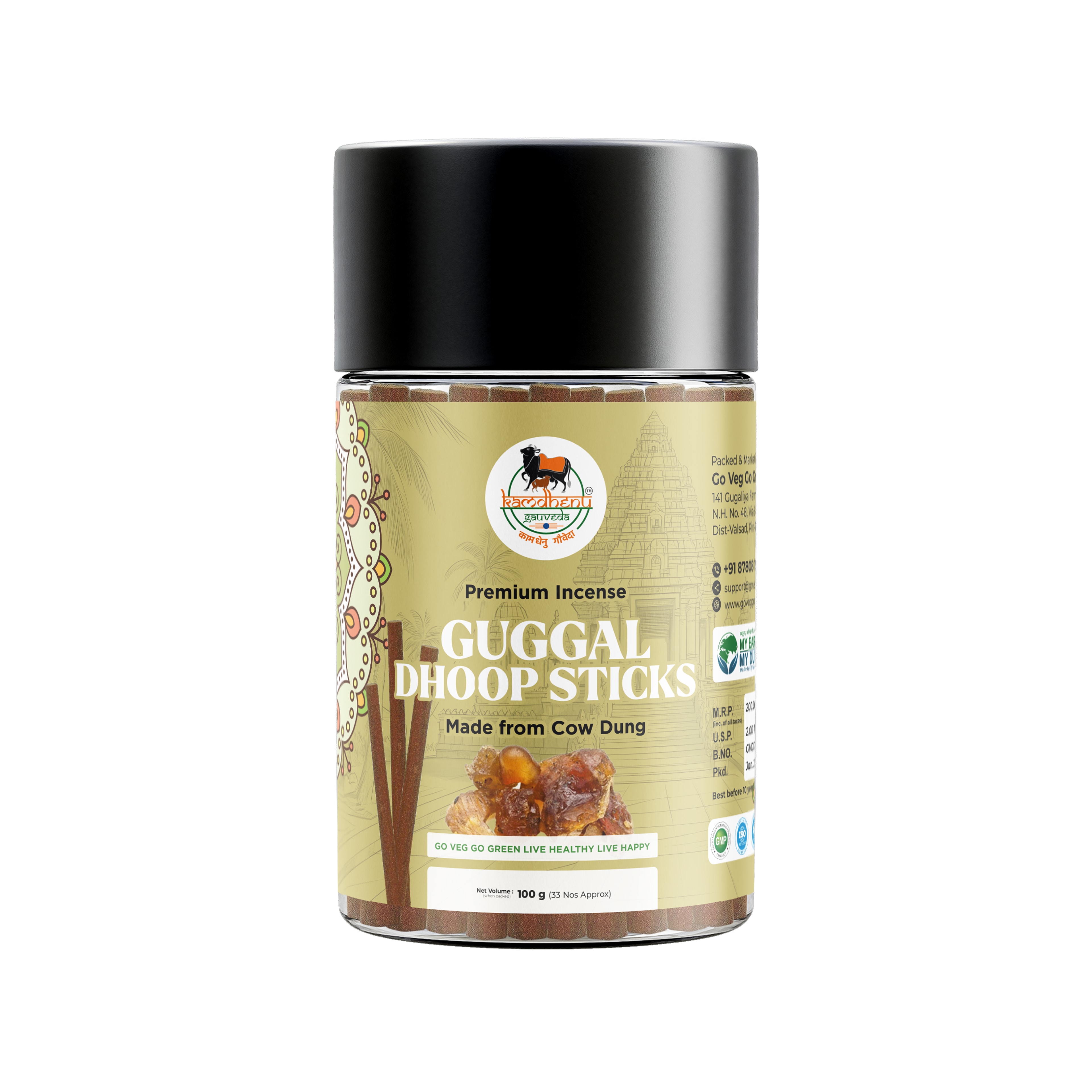
- Guggal Dhoop Sticks: the classic temple fragrance
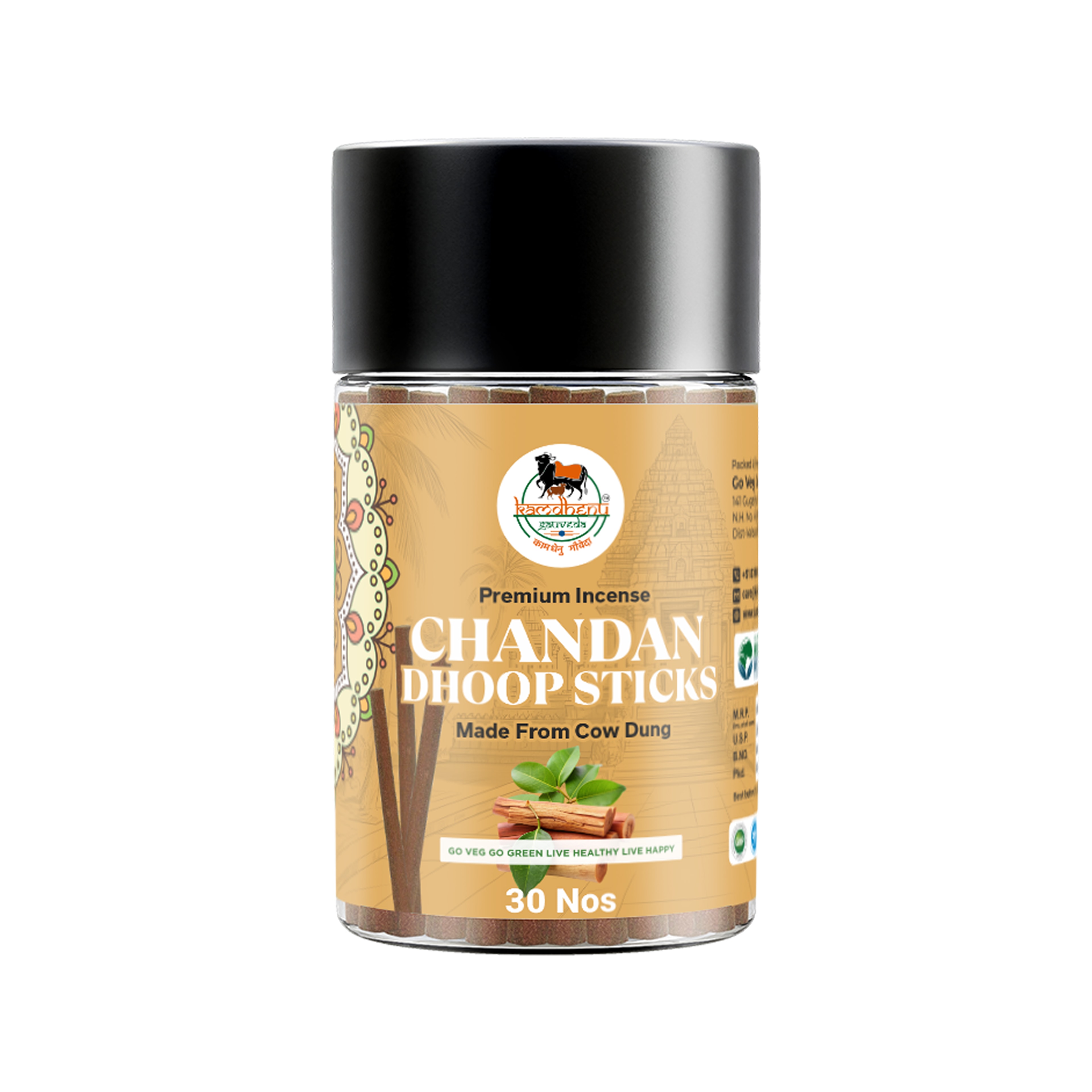
- Chandan Dhoop Sticks: sandalwood, calming for meditation
- Kapoor & Guggal Dhoop Sticks: camphor and guggal for purification
Dhoop Cones: quick, concentrated aroma
Cones have a wide base and narrow tip. They burn from the top down, faster and hotter than sticks.
Why choose dhoop cones
- Fragrance fills a room in minutes.
- Compact. No stand needed, just a heat-safe plate.
- Great for short rituals, a quick aarti, or before guests arrive.
Best for: sandhya aarti, small mandirs and flats, freshening a room fast, and festival days when you want an instant festive feel.
How to use: Hold a matchstick to the tip until it glows, blow out the flame, and set the cone on a heat-safe holder or plate.
Our picks:
- Guggal Dhoop Cones: traditional temple aroma
- Gulab Dhoop Cones: soft rose
- Mogra Dhoop Cones: jasmine, fresh and floral
- Kesar Chandan Dhoop Cones: saffron and sandalwood
Havan Cups (Sambrani Cups): a havan in a cup
A havan cup, also called a sambrani cup or sabrani cup, is a small cup-shaped dhoop. Ours are made of desi cow dung, sambrani (benzoin resin) and havan samagri. You light the rim and it smoulders like a mini havan, releasing thick, sweet, resinous smoke.
Why choose havan / sambrani cups
- The closest thing to a real havan without a havan kund, wood, ghee or loose samagri.
- Thick smoke for traditional dhoop dena: moving the smoke through every room, in corners and near the entrance.
- No mess. Everything is pre-measured in one cup.
Best for: Saturday, Amavasya and Purnima rituals, griha pravesh, after a long illness or when a home "feels heavy", the traditional South Indian post-bath sambrani, and new-shop or office pooja.
How to use:
- Place the cup on a heat-safe plate or holder.
- Light the rim evenly and gently blow out the flame.
- Let it smoulder. Carry the plate through the house if you like.
- Keep windows slightly open. Never leave it unattended, and keep it away from curtains, children and pets.
With or without camphor?
- Sambrani Cup with Camphor: lights faster, with a sharper, cleansing aroma
- Sambrani Cup without Camphor: a softer, pure sambrani fragrance
- Sambrani Havan Dhoop Cup: cow dung + sambrani + havan samagri
Cow dung base vs charcoal base: why it matters
This is what most buyers miss. Many cheap dhoop products use charcoal powder as the burning base, plus synthetic perfume to hide the smell. Cow-dung dhoop is different:
| Cow dung base | Charcoal / sawdust base | |
|---|---|---|
| Burning smell | Earthy, natural | Harsh or smoky under the perfume |
| Fragrance source | Herbs, resins (guggal, loban, sambrani) | Often synthetic perfume |
| Ash | Fine, burns fully | Can leave residue or the bamboo stick |
| Tradition | Gau-based, used in yagya for centuries | Modern, industrial |
| Supports | Desi cows and gaushalas | — |
Every cow-dung dhoop stick, cone and cup also gives economic value to desi cows, which helps gaushalas become self-reliant. (Read more: Gaumutra economics and gaushala financial independence.)
Which should you buy? Ritual by ritual
| Occasion | Best choice |
|---|---|
| Daily morning pooja | Dhoop stick (Guggal or Chandan) |
| Evening sandhya aarti | Dhoop cone (Loban or Guggal) |
| Meditation / yoga | Dhoop stick (Natural or Chandan) |
| Saturday / Shani pooja | Havan cup with camphor |
| Amavasya / Purnima | Havan / sambrani cup |
| Griha pravesh / new office | Havan cup + dhoop sticks |
| Small flat, quick freshness | Dhoop cone (Gulab or Mogra) |
| Guests arriving in 10 minutes | Dhoop cone |
| Smoke-sensitive family member | Natural dhoop stick (no added perfume) |
Many homes keep all three: sticks for every day, cones for evenings and cups for special rituals.
Safety tips for any dhoop
- Always burn on a heat-safe surface, away from curtains, paper and wooden shelves.
- Keep a window slightly open. Any smoke, natural or not, should be ventilated, especially if someone in the house has asthma.
- Never leave it burning unattended, and keep it out of reach of children and pets.
- Store packs in a cool, dry, airtight place. Damp dhoop won't stay lit.
Explore the full range of dhoop sticks, dhoop cones and sambrani cups, all made from desi cow dung.
Frequently asked questions
Which is better, dhoop sticks or dhoop cones?
Sticks burn longer with a gentler fragrance, which suits daily pooja and meditation. Cones burn faster with a stronger aroma, which suits quick rituals and small rooms.
What is a sambrani cup used for?
A sambrani (havan) cup is used for havan-style purification at home: during Saturday or Amavasya rituals, griha pravesh, or to spread fragrant smoke through the house. It gives thicker smoke than sticks or cones.
Is a havan cup the same as a sambrani cup?
Mostly, yes. Both are cup-shaped dhoop. "Sambrani cup" usually means it contains sambrani (benzoin resin). A "havan cup" may also contain havan samagri. Ours combines cow dung, sambrani and havan samagri.
How long does a dhoop cone burn?
Typically 15–25 minutes, depending on size and airflow. Dhoop sticks last around 30–45 minutes.
Is cow dung dhoop safe to use indoors?
Yes, with normal ventilation. Cow-dung dhoop is charcoal-free and made with natural herbs and resins, but like any smoke it should be burned with a window open.
What is the difference between dhoop and agarbatti?
Agarbatti has a bamboo stick core and is usually perfumed. Dhoop is solid fragrant material with no bamboo, and it burns fully with a richer smoke.
Sambrani cup with camphor or without camphor: which should I buy?
With camphor lights more easily and has a sharper, cleansing aroma. Without camphor gives a softer, pure sambrani fragrance, which is better if camphor feels too strong.
Shop the products in this article
Shop all →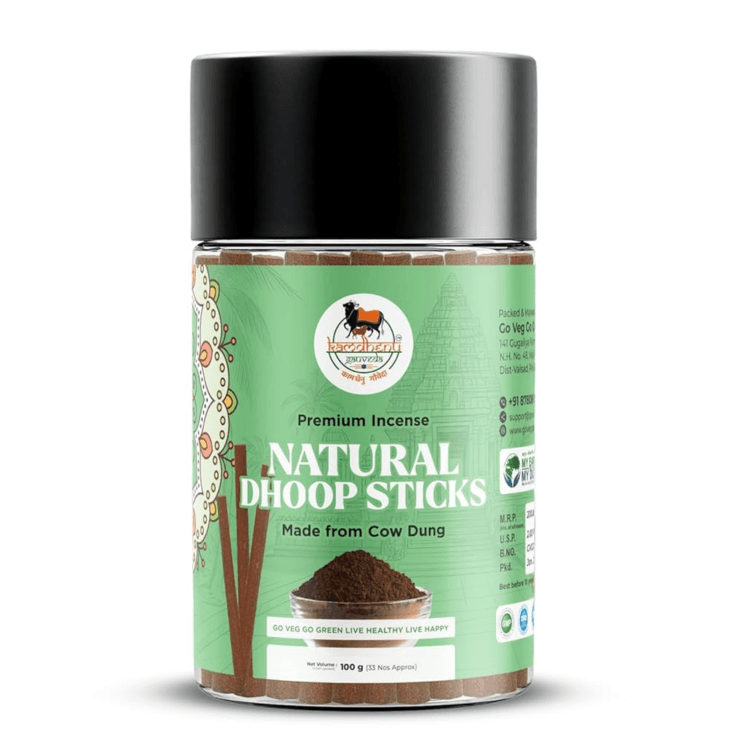
Natural dhoop Sticks (Cow Dung)
₹170.00₹260.0035% off
Guggal Dhoop Sticks (Cow Dung)
₹170.00₹260.0035% off
Chandan Dhoop Sticks (Cow Dung)
₹170.00₹260.0035% off
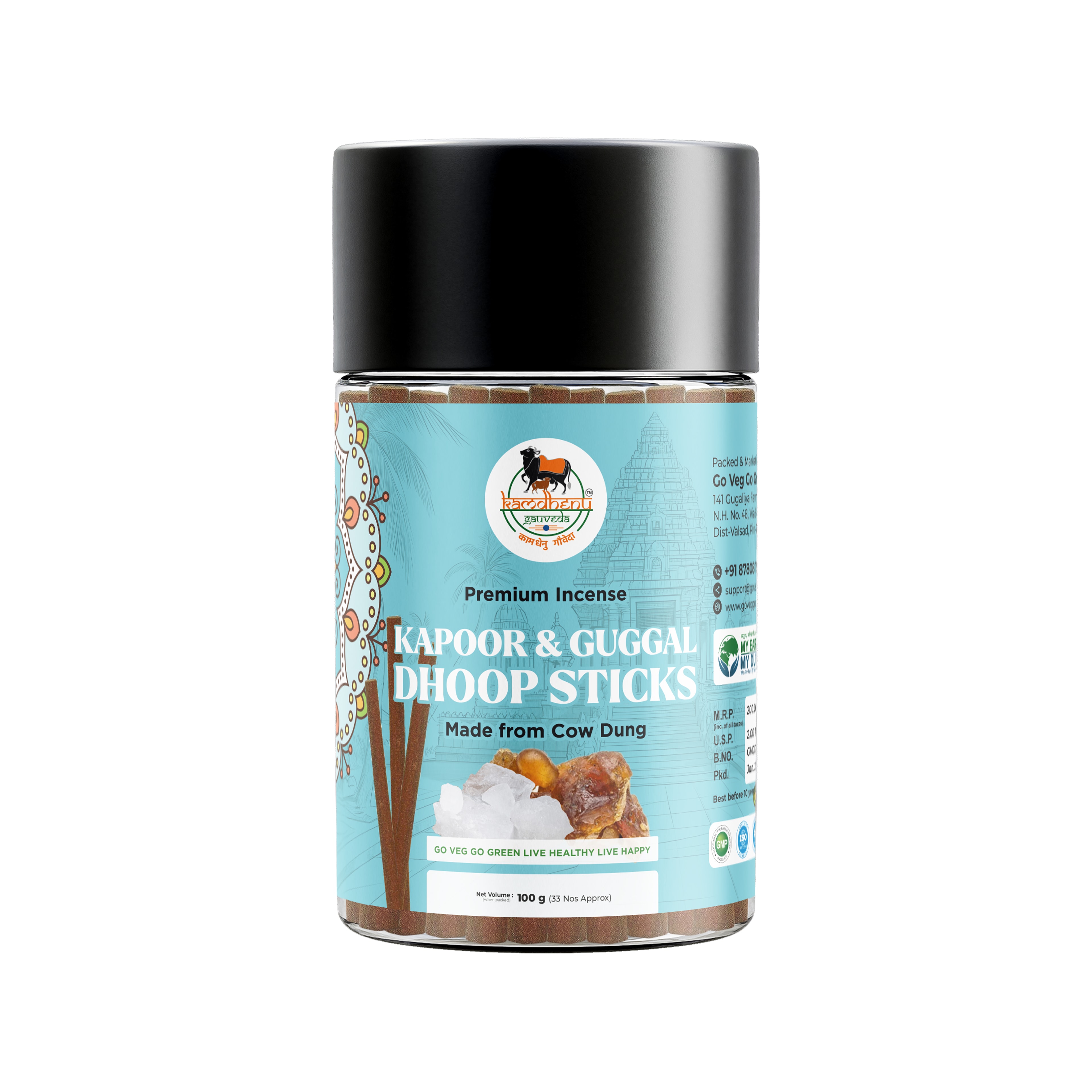
Kapoor And Guggal Dhoop Sticks (Cow Dung)
₹170.00₹260.0035% off