
Cow Ghee vs Buffalo Ghee: Benefits, Nutrition & Which Is Better? (2026)
By Shubham Jain · · A2 Ghee

The answer depends on your body needs. Cow ghee is lighter, easier to digest, and ideal for daily consumption, while buffalo ghee is heavier, richer in fat, and better for high energy requirements.
In this guide, we compare cow ghee and buffalo ghee based on nutrition, health benefits, digestion, cooking uses, and price to help you choose the right ghee for your lifestyle.
What Is Cow Ghee? (Benefits, Texture & Digestibility)
Cow ghee is made from cow’s milk and has a beautiful golden-yellow color. It contains essential fatty acids, vitamins (A, D, E, K), and antioxidants. It’s known for being light, aromatic, and easy to digest, making it suitable for daily consumption. In Ayurveda, cow ghee is considered satvik — pure and calming for the body and mind.
- Golden yellow color
- Light texture and mild aroma
- Easy to digest
- Rich in vitamins and omega-3 fatty acids
- Ideal for children, elderly people, and those with digestion issues
What Is Buffalo Ghee? (Fat Content, Energy & Uses)
Buffalo ghee is prepared from buffalo’s milk and has a white or creamy color. It contains higher fat content compared to cow ghee, making it thicker and richer. Buffalo ghee is known to give instant energy and is often preferred by people with higher physical activity levels, such as athletes and laborers.
- White color and thick texture
- Strong flavor
- High in fat and calories
- Good for energy and bone strength
- Longer shelf life than cow ghee
Cow Ghee vs Buffalo Ghee: Key Differences
| Feature | Cow Ghee | Buffalo Ghee |
| Color | Golden yellow | White or creamy |
| Fat Content | Moderate | High |
| Digestibility | Easy to digest | Heavier on stomach |
| Taste & Aroma | Mild and pleasant | Rich and strong |
| Shelf Life | Shorter | Longer |
| Best For | Kids, elderly, everyday cooking | Athletes, sweet making, deep frying |
When comparing cow ghee vs buffalo ghee fat content, buffalo ghee clearly has more fat, which gives it a thicker consistency and richer taste. On the other hand, cow ghee has moderate fat, making it lighter and better for daily use.
Cow Ghee vs Buffalo Ghee: Full Nutrition Comparison (per 1 tbsp)
| Nutrient (Per 1 Tbsp) | Cow Ghee | Buffalo Ghee |
|---|---|---|
| Calories | ~120 kcal | ~135 kcal |
| Total Fat | ~14g | ~16g |
| Saturated Fat | ~9g | ~11g |
| Beta-Carotene | Present (gives yellow color) | Absent |
| Vitamin A | ~438 IU | Lower |
| CLA (Conjugated Linoleic Acid) | ~0.5–0.9g | Comparable or higher |
| Butyric Acid | ~3–4% | ~2–3% |
| Cholesterol | Moderate | Higher |
| Digestibility | Easy | Heavy |
Values are approximate and vary based on milk source and preparation method.
Cow Ghee vs Buffalo Ghee: Fat Content, Vitamins & Key Nutritional Differences
Both ghees are packed with nutrients, but their composition varies.
- Cow Ghee: Contains healthy fats, beta-carotene (gives yellow color), and vitamins A & D.
- Buffalo Ghee: Has significantly higher fat content but lacks beta-carotene, which is why it appears white. Ghee is almost entirely pure fat with negligible protein in either type..
If you’re watching your diet, cow ghee’s lower fat content can help you manage calories without compromising on nutrition.
Also Read: A1 Ghee Vs A2 Ghee
Health Benefits of Cow Ghee vs Buffalo Ghee
Cow Ghee Benefits:
- Improves digestion and immunity
- Supports heart and joint health
- Enhances memory and concentration
- Promotes glowing skin and strong hair
- Ideal for children’s growth and brain development
Cow ghee is also widely used in Ayurveda for Panchakarma therapies and to balance Vata and Pitta doshas.
Buffalo Ghee Benefits:
- Boosts energy and stamina
- Strengthens bones and muscles
- Ideal for people doing heavy physical work
- Helps in gaining weight naturally
- Supports deep sleep and relaxation
Because of its high fat content, buffalo ghee provides long-lasting energy and keeps you fuller for longer periods.
Cow Ghee vs Buffalo Ghee in Ayurveda: Satvik vs Tamasic
- In Ayurveda, cow ghee is called Satvik — it brings calmness, purity, and mental clarity. It’s recommended for meditation, detox, and healing.
- Buffalo ghee, on the other hand, is considered Tamasic — heavier and grounding, useful for physical strength and energy but not suitable for overuse.
Cow Ghee vs Buffalo Ghee for Cooking, Skincare & Smoke Point
When it comes to high-heat cooking, smoke point matters. Cow ghee has a smoke point of approximately 230°C (450°F), while buffalo ghee reaches around 250°C (480°F). This makes buffalo ghee slightly more stable for deep frying and high-temperature cooking. However, both ghees are far safer for cooking than refined oils, which break down and release harmful compounds at high heat. For daily sautéing, tadka, and light frying, cow ghee's smoke point is more than sufficient.
Cow Ghee vs Buffalo Ghee for Weight Loss & Weight Gain
For weight loss: Cow ghee is the better choice. Its lower calorie density (~120 kcal per tbsp vs ~135 kcal), higher butyric acid content, and easier digestibility support a healthy metabolism. Studies on butyrate suggest it plays a role in regulating gut hormones linked to appetite. Use 1–2 teaspoons of cow ghee daily as part of a balanced diet.
For weight gain: Buffalo ghee is more effective. Its higher fat and calorie content makes it ideal for those who need caloric surplus — athletes, bodybuilders, underweight individuals, or those recovering from illness. Adding 1–2 tablespoons of buffalo ghee to dal, roti, or rice provides dense, natural energy. Neither ghee causes weight gain on its own when consumed in appropriate quantities. The key is moderation and matching the ghee type to your body's actual needs.
Cow Ghee vs Buffalo Ghee During Pregnancy & for Babies
During pregnancy, both cow ghee and buffalo ghee are beneficial, but they serve different purposes. Cow ghee is rich in omega-3 fatty acids and DHA precursors that support the baby's brain development during the third trimester. It is also lighter and easier to digest, which matters when pregnancy-related digestive sensitivity is common. 1 teaspoon per day is considered safe and beneficial.
Buffalo ghee provides higher calcium and phosphorus, which support the mother's bone health and the baby's skeletal development. However, its heavier fat content can aggravate heartburn or nausea in some pregnant women. For babies above 6 months: A small amount of cow ghee added to khichdi or mashed vegetables aids digestion, brain development, and healthy weight gain.
Buffalo ghee is generally not recommended for infants due to its heavier consistency. Always consult your doctor before introducing any ghee during pregnancy or to infants.
Cow Ghee vs Buffalo Ghee: Cholesterol & Heart Health
A common concern is whether ghee raises cholesterol. The answer depends on the type and quantity. Cow ghee contains moderate saturated fat (~9g per tbsp) alongside healthy unsaturated fats, omega-3 fatty acids, and CLA. When consumed in moderation (1–2 tsp/day), research suggests cow ghee does not raise LDL (bad) cholesterol and may even support HDL (good) cholesterol levels.
Buffalo ghee has higher saturated fat (~11g per tbsp) and higher overall fat content. For people who already have high cholesterol or cardiovascular concerns, buffalo ghee should be consumed very sparingly. Both ghees are far preferable to refined oils and vanaspati (partially hydrogenated oils) from a heart health standpoint. The traditional Indian diet used ghee sensibly — small quantities as a finishing fat, not a cooking medium used in excess.
Which Ghee Is Better in Winter — Cow Ghee or Buffalo Ghee?
In Ayurveda, winter calls for heavier, more nourishing foods that build warmth and energy in the body. Buffalo ghee, with its higher fat content and heating properties, is traditionally favoured in winter months. It helps maintain body heat, supports joint lubrication in cold weather, and provides the calorie-dense energy needed when the body works harder to stay warm.
Cow ghee remains appropriate year-round and is the better choice for those with slow digestion, even in winter. If you are physically active during winter — playing sports, farming, or doing manual labour — buffalo ghee is an excellent seasonal addition. For most urban households, cow ghee is the practical all-season choice, with buffalo ghee used occasionally for winter sweets like til laddoo, panjiri, and gaund ke laddoo.
Cow Ghee vs Buffalo Ghee Price in India
When it comes to pricing, cow ghee is usually slightly more expensive than buffalo ghee. This is because cow milk yields less fat and requires more quantity to produce ghee. Buffalo ghee, on the other hand, is more affordable due to its higher fat yield.
However, price should not be the only factor — purity and traditional preparation methods matter most for quality and health benefits.
How to Identify Pure Ghee?
To ensure you’re buying pure and chemical-free ghee, check for:
- Natural aroma and grainy texture
- Golden yellow color in cow ghee
- Transparent labeling and FSSAI approval
- “A2” or “Bilona” mentioned on the packaging
Pure ghee melts quickly and solidifies evenly at room temperature — a clear sign of authenticity.
Also Read:
Final Verdict — Which One Should You Choose?
Both ghees are pure, natural, and beneficial — the right choice simply depends on your body and lifestyle.
Choose cow ghee if you want better digestion, daily use, weight management, or are cooking for children and elderly family members. It is lighter, rich in vitamins, and backed by Ayurveda as a satvik food for overall wellness.
Choose buffalo ghee if you need high energy, are doing heavy physical work, want richer sweets and festive cooking, or need extra nourishment in winter months.
For most Indian households, cow ghee is the everyday staple and buffalo ghee is the occasional addition — not a replacement.
Above all, the quality of ghee matters more than the type. Always choose ghee made from pure milk, using the traditional Bilona method, free from adulteration and chemicals.
Why Choose Kamdhenu Gauveda Cow Ghee?
If you have decided cow ghee is right for you, the next question is quality — and that is where most brands fall short.
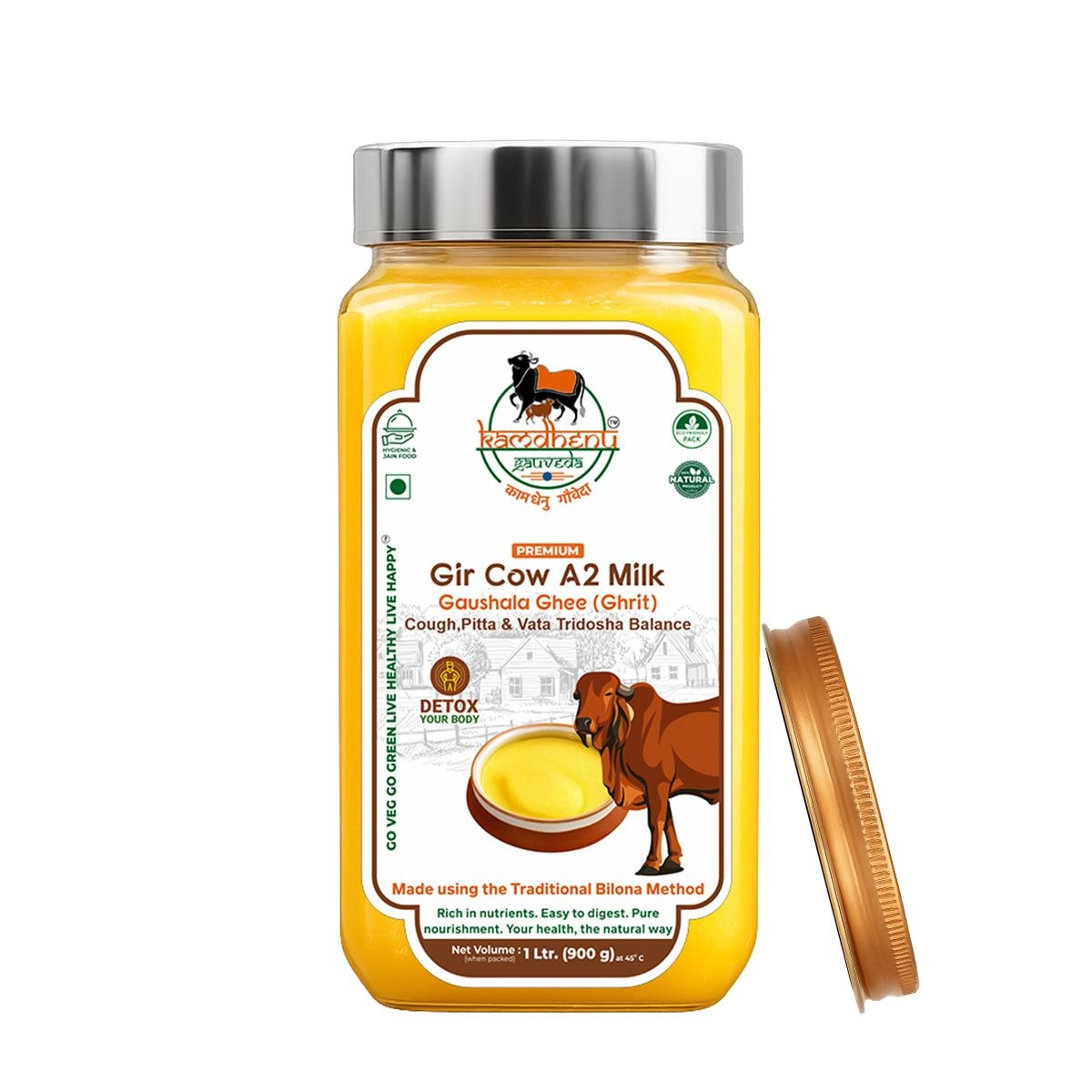
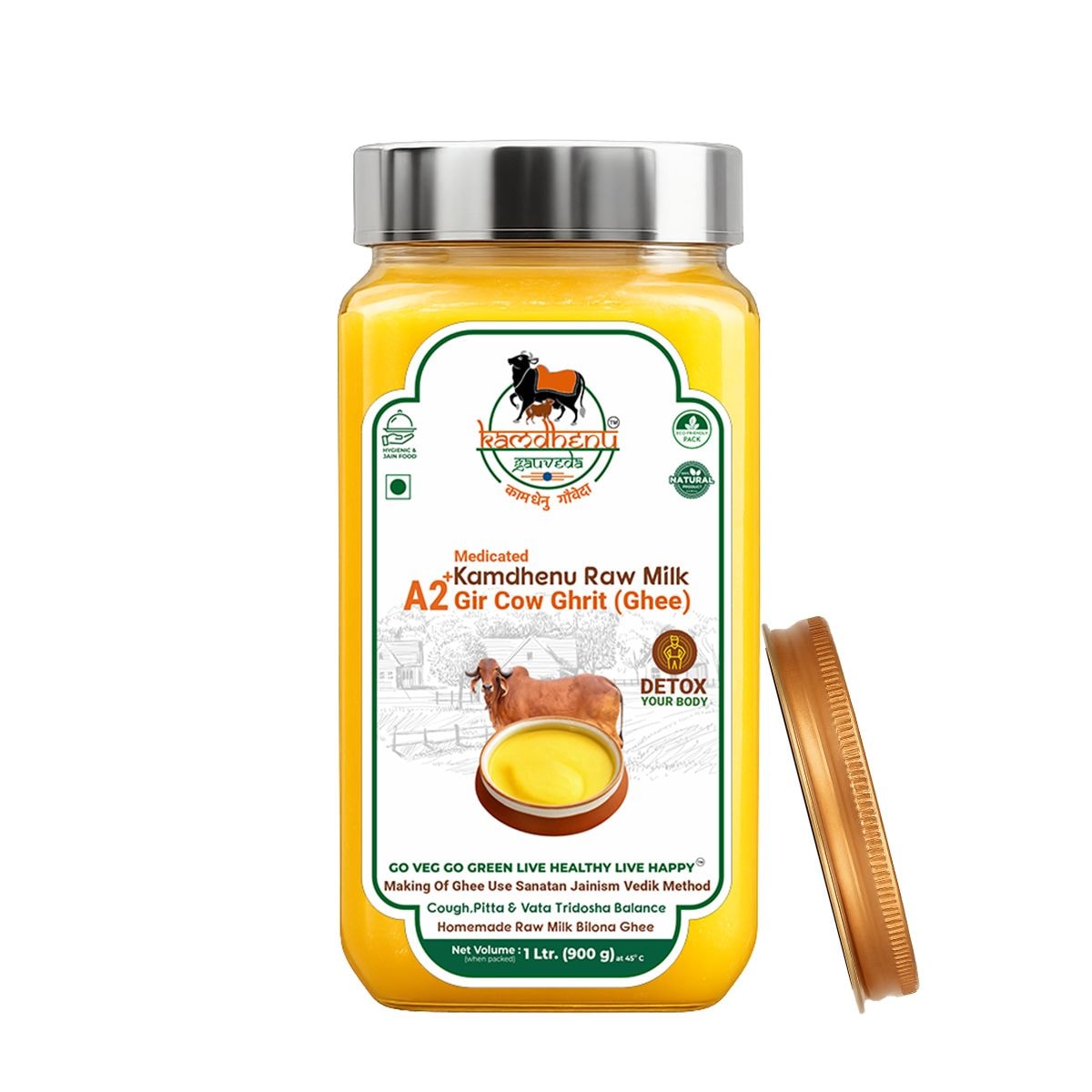
At Kamdhenu Gauveda, our A2 Gir Cow Ghee is made using the traditional Bilona method — hand-churned curd, slow-simmered on low flame — preserving every nutrient discussed in this article: butyric acid, beta-carotene, vitamins A, D, E and K.
- Sourced from verified A2 Gir cow breeds
- No chemicals, preservatives, or additives
- FSSAI certified and ISO 9001 approved
- Lab-tested for purity
References
- Butyrate and intestinal barrier function — Nutrients, 2018. doi:10.3390/nu10101499 (PMC6213552)
- Physico-chemical parameters to distinguish cow ghee from buffalo ghee — Journal of Food Science and Technology, 2022, 59(8): 3231–3236
- Chemical and sensory characterization of cow and buffalo ghee — SciELO / ResearchGate, 2020
- FSSAI Standards for Ghee (Milk Fat Products) — Food Safety and Standards Authority of India, fssai.gov.in
- Ayurvedic Pharmacopoeia of India — Ministry of AYUSH, Government of India, ayush.gov.in
Disclaimer: This article is for educational purposes only and is not a substitute for professional medical advice. Always consult a qualified doctor, Ayurvedic practitioner, or nutritionist before making dietary changes — especially during pregnancy, for infants, or if you have an existing health condition. Nutritional values mentioned are approximate and may vary based on milk source, animal breed, and preparation method.
Frequently asked questions
Can I mix cow and buffalo ghee?
Yes, but it’s best to use them separately depending on your need — cow ghee for daily use, buffalo ghee for sweets.
Why is buffalo ghee white in color?
Buffalo milk lacks beta-carotene, which gives cow ghee its yellow hue.
What is the difference in cow ghee vs buffalo ghee price?
Cow ghee is generally more expensive than buffalo ghee, due to lower fat yield and traditional preparation methods.
Cow ghee or buffalo ghee — which is better for skin?
Cow ghee is better for skin. It’s lighter, rich in vitamins, and absorbs easily, giving soft, glowing skin. Buffalo ghee is heavier and suits only very dry skin.
Which ghee is better in taste?
Cow ghee has a mild, pleasant flavor for daily cooking, while buffalo ghee has a rich, creamy taste ideal for sweets and deep-fried dishes.
Which ghee is better for weight loss — cow ghee or buffalo ghee?
Cow ghee is better for weight loss. It is lower in calories (~120 kcal per tbsp), easier to digest, and its butyric acid content supports gut health and metabolism. Consume 1–2 teaspoons daily. Buffalo ghee is higher in fat and better suited for those looking to gain weight.
Can I use buffalo ghee during pregnancy?
Yes, in moderation. Buffalo ghee provides calcium and phosphorus beneficial for bone health. However, cow ghee is generally preferred during pregnancy as it is lighter, easier to digest, and rich in omega-3 fatty acids that support fetal brain development. Always consult your doctor before making dietary changes during pregnancy.
What is the smoke point of cow ghee vs buffalo ghee?
Cow ghee has a smoke point of approximately 230°C (450°F), while buffalo ghee has a slightly higher smoke point of around 250°C (480°F). Both are excellent for high-heat Indian cooking. Buffalo ghee is marginally better for deep frying, while cow ghee is ideal for tadka, sautéing, and everyday cooking.
Which ghee is better in winter — cow or buffalo?
Buffalo ghee is traditionally preferred in winter in Ayurveda. Its higher fat content generates body heat, supports joint health in cold weather, and provides dense energy. Cow ghee is a good all-season choice, but adding buffalo ghee in winter sweets like til laddoo or panjiri is a traditional practice across North India.
Which is better — A2 cow ghee or buffalo ghee?
A2 cow ghee is superior for daily health use. It contains A2 beta-casein protein (easier to digest), higher butyric acid, beta-carotene, and omega-3 fatty acids. Regular buffalo ghee lacks the A2 protein advantage. If comparing purely on nutrition and digestibility, A2 cow ghee — especially made from Gir or Sahiwal cows using the Bilona method — is the better choice for most people.
Pure A2 bilona ghee from our gaushala
Shop A2 ghee →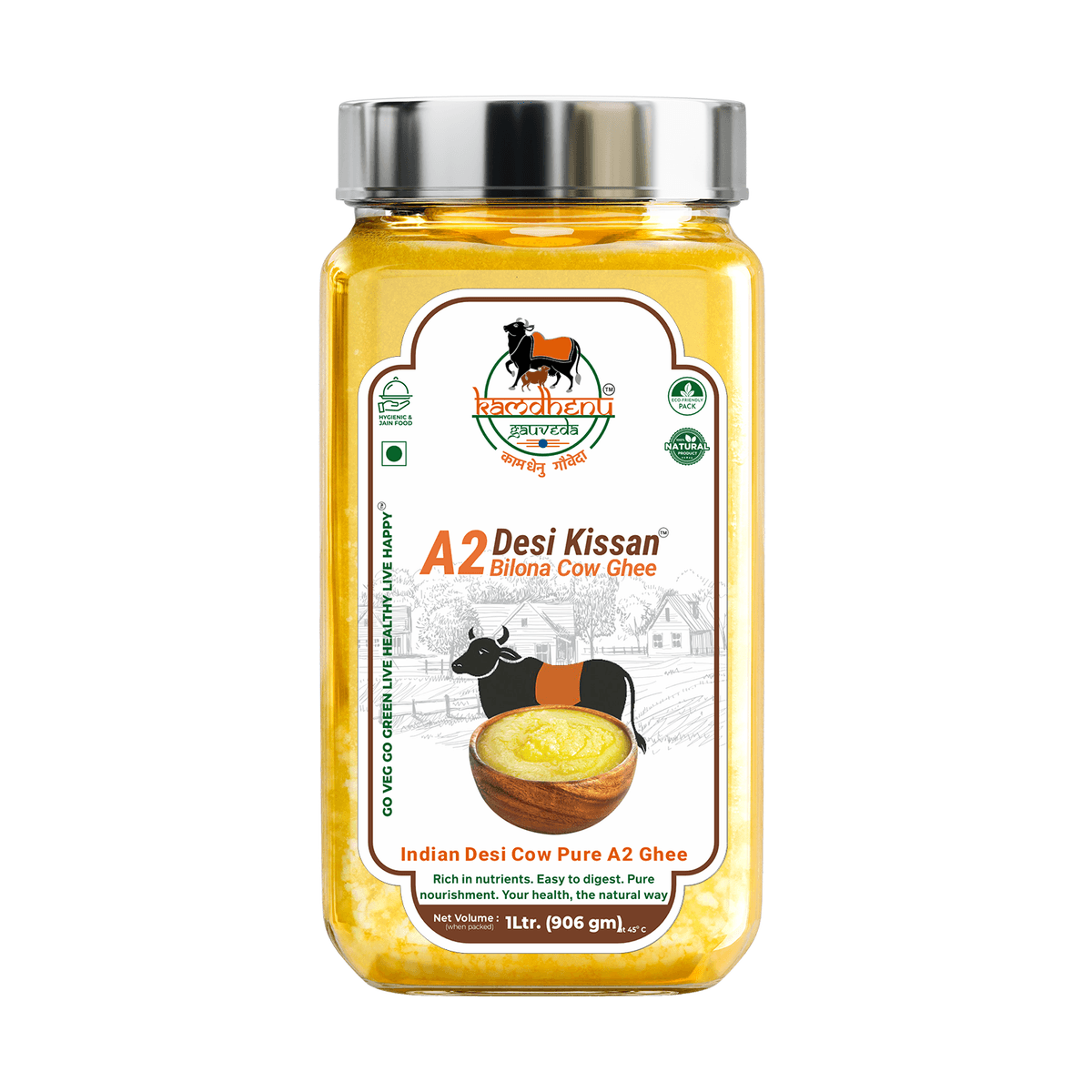
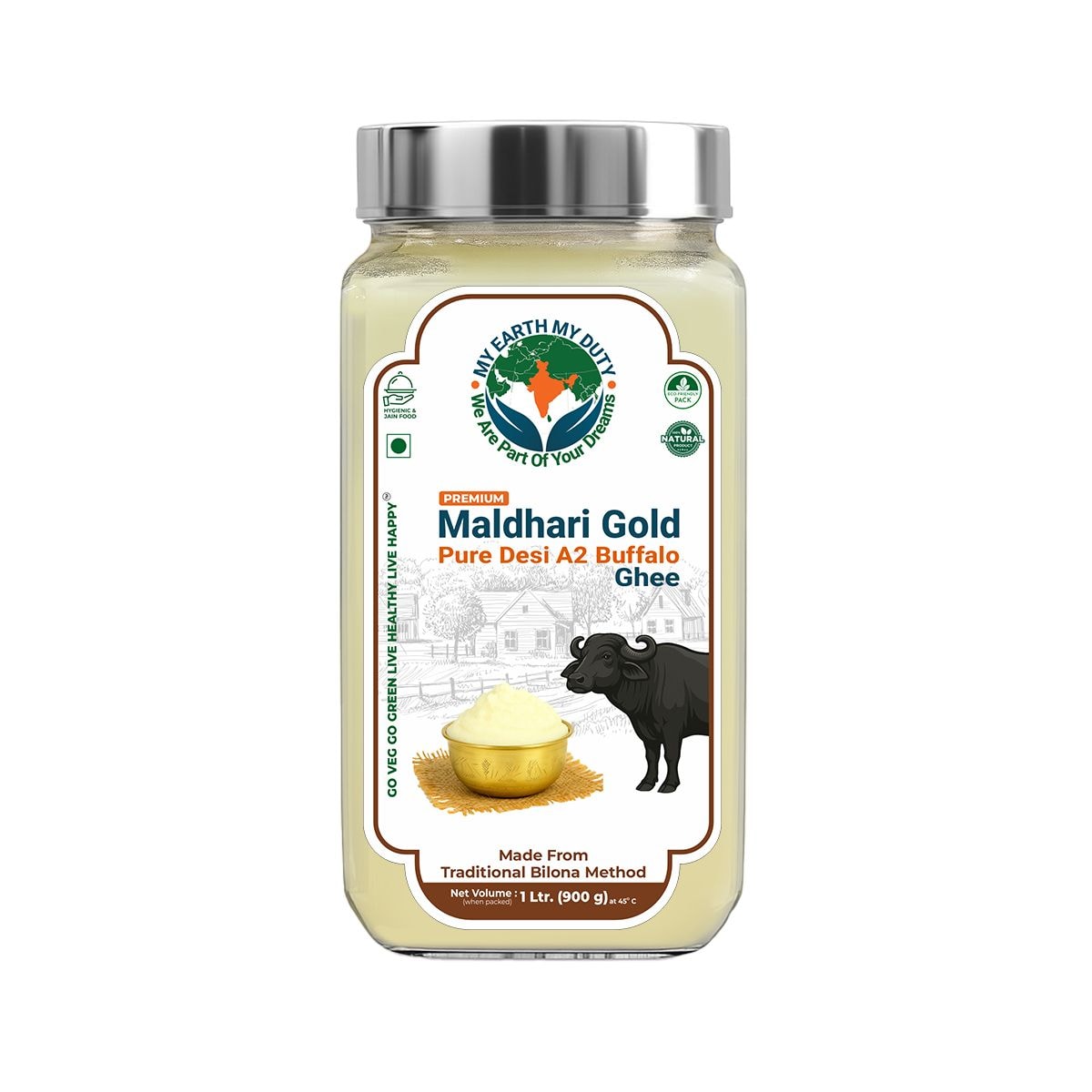
Desi A2 Buffalo Ghee – Pure Bilona Buffalo Ghee 1kg Price
₹1,500.00₹3,000.0050% off