







Blog
Vechur Cow Guide: Milk Yield, 2026 Price, & A2 Benefits
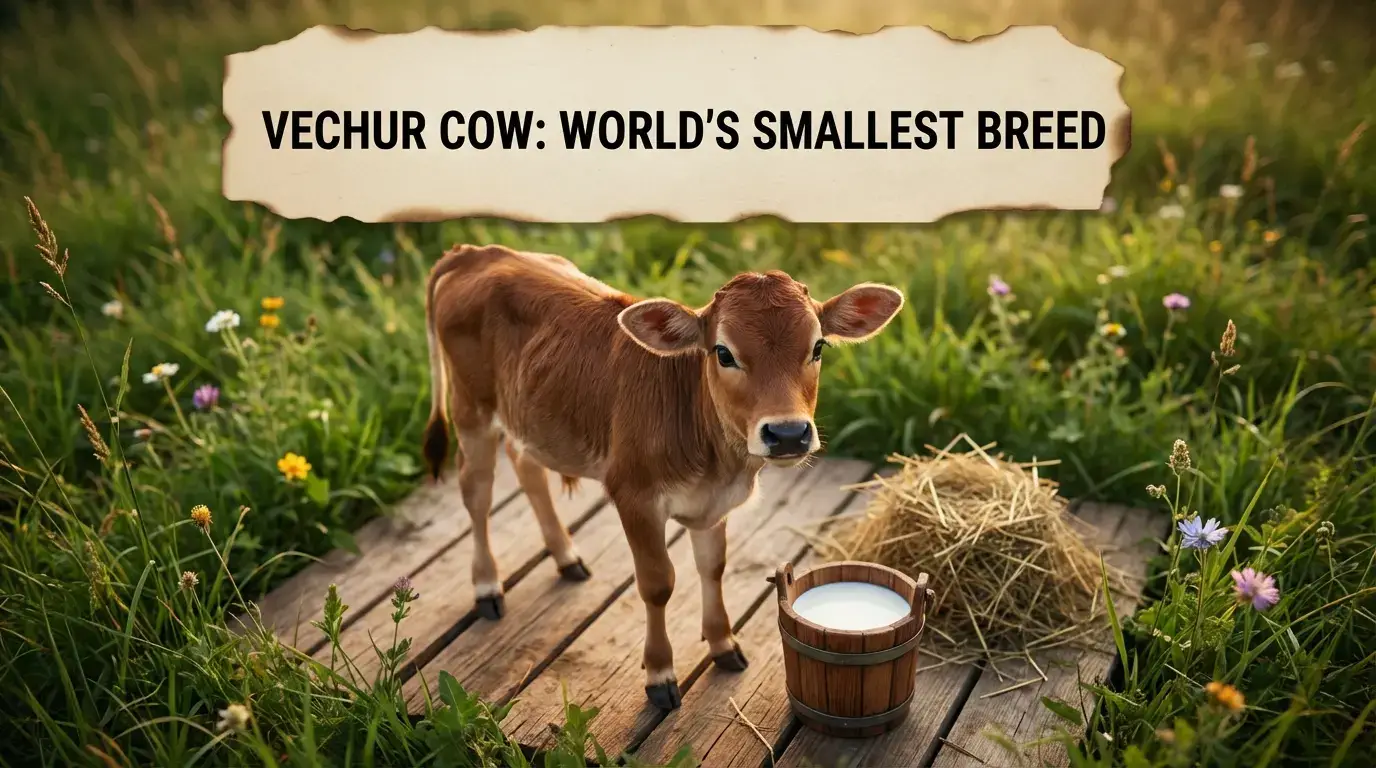
India is home to some of the most precious indigenous cattle breeds, and the Vechur cow is one of the rarest among them. Known as the smallest cow breed in the world, this Kerala-origin desi cow is gaining attention among A2 milk buyers, organic dairy farmers, and traditional ghee consumers
But the real question people search for is:
👉 How much milk does a Vechur cow give per day?
👉 Is Vechur cow milk A2?
👉 Is it good for making A2 ghee?
👉 Is Vechur cow suitable for small dairy farming?
This detailed guide answers everything.
What is Vechur Cow?
The Vechur cow is a rare indigenous cattle breed from Vechur village in Kerala. It is officially recognized as the smallest cow breed in the world, standing under 90 cm in height.
Key Characteristics of Vechur Cow
- Height: 85–91 cm
- Weight: 105 kg to 150 kg.
- Fat Content: 4.7% to 5.8% (Ideal for danedaar Ghee)
- Coat color: Usually reddish brown, black, or mixed
- Temperament: Calm and manageable
- Climate adaptability: Excellent for humid and tropical regions
- Feed requirement: Very low compared to crossbred cows
Because of its compact size, this cow is ideal for small farmers, backyard dairy units, and low-investment dairy models.
Vechur Cow Milk Per Day – Actual Milk Yield
One of the most searched queries is:
How Much Milk Does a Vechur Cow Give Per Day?
👉 Average milk production per day: 2 to 3 liters
In some well-managed conditions, it may reach 3.5 liters per day, but generally the yield remains moderate.
Lactation Yield
- Approx. 450–600 liters per lactation cycle
- Lactation period: 8–10 months
Important Note for Buyers
Vechur cows do NOT produce high volume milk like HF or Jersey cows.
But the value lies in quality, digestibility, and A2 protein, not quantity.
This is why it is popular among:
- A2 milk consumers
- Ayurveda-based dairy brands
- Desi ghee manufacturers
Is Vechur Cow Milk A2?
Yes. Vechur cow milk naturally contains A2 beta-casein protein, which is found in most Indian indigenous breeds.
Why A2 Milk Matters?
Many consumers search:
- “Is A2 milk easier to digest?”
- “Difference between A1 and A2 milk?”
- “Best cow for A2 milk in India?”
Vechur cow falls under indigenous (desi) category, and like other desi breeds, it produces pure A2 type milk, which:
- Is considered easier to digest
- May reduce bloating compared to A1 milk
- Contains smaller fat globules
- Is preferred for making traditional bilona ghee
Why is Vechur Cow Milk Special?
Although milk quantity is lower, the quality parameters are impressive.
1. Higher Fat Content
Vechur cow milk contains around 4.7% to 5.8% fat, making it ideal for:
- A2 ghee preparation
- Butter
- Curd
- Paneer
2. Better Digestibility
Due to smaller fat globules, the milk is often considered lighter on digestion.
3. Low Antibiotic Dependency
Vechur cows are naturally hardy and disease-resistant. This reduces chemical dependency — a major concern for health-conscious milk buyers.
The Price & Market Section
Your current article misses the “Price” intent found in your keyword research. This is a high-traffic query.
Vechur Cow Price in India (2026)
Buying a Vechur cow is an investment in rare genetics. Because they were once nearly extinct, they are priced higher than local non-descript cows but lower than commercial Sahiwals.
- Average Price: ₹65,000 to ₹1,10,000.
- Calf Price: ₹25,000 to ₹45,000.
- Where to buy: Primary markets are in Kerala (Kottayam, Alappuzha, and Thrissur). Ensure you check for the Vechur Conservation Trust certification to ensure breed purity.
Also Read: What is A2 Bilona Ghee? Benefits & Process
Is Vechur Cow Good for Dairy Farming?
Now let’s address farmer-focused search queries:
“Is Vechur cow profitable?”
“Should I buy Vechur cow for dairy?”
✅ Advantages
- Low feed cost
- Low maintenance
- Suitable for small land holdings
- Heat tolerant
- Disease resistant
- Ideal for organic dairy model
❌ Limitations
- Low milk volume (not suitable for commercial bulk dairy)
- Breed availability is limited
- Requires proper breeding conservation
Vechur Cow vs Other Desi Breeds
| Breed | Milk Per Day | Best For |
| Vechur Cow | 2–3 Liters | Premium A2 milk, small farms |
| Punganur Cow | 3–5 Liters | Household dairy |
| Sahiwal Cow | 8–12 Liters | Commercial A2 dairy |
Why is Vechur Cow Rare?
In the 1980s–90s, excessive crossbreeding almost pushed Vechur cows toward extinction.
Conservation programs later helped restore the population. Because of its rarity, Vechur cow is sometimes referred to as a heritage cattle breed of India.
You already have:
Vechur Cow Milk vs A2 Cow Milk – Are They the Same?
| Factor | Vechur Cow Milk | A2 Cow Milk |
| Breed Specific? | Yes (only Vechur breed) | No (can be any A2-producing breed) |
| Protein Type | A2 | A2 |
| Milk Yield | 2–3 liters/day | Depends on breed |
| Rarity | Rare breed | Common among desi cows |
| Best For | Small farms & premium niche dairy | A2 milk consumers |
Who Should Buy or Consider Vechur Cow Milk?
You should consider Vechur cow milk if:
- You prefer A2 milk
- You are sensitive to regular milk digestion
- You want chemical-free traditional dairy
- You value indigenous cow preservation
- You use milk mainly for home consumption
Frequently Asked Questions
On average, 2 to 3 liters per day.
Yes. The Vechur cow is officially recognized by Guinness World Records as the smallest cattle breed in the world. While the average height is between 81 cm and 91 cm, individual cows like Manikyam have set records standing at just 61 cm (approx. 2 feet) tall.
Yes. Due to higher fat content and A2 protein, it is excellent for traditional bilona ghee.
Yes, because of low feed cost and compact size.
Typically 12–15 years under proper care.
Because its average height is below 90 cm, making it the smallest recognized cattle breed globally.
Top Rated Products

Latest Post