







Blog
How is Bilona Method Ghee Made: Step by Step Process
Ghee has always held a special place in Indian households — known for nourishment, purity, and healing. But today, not all ghee is made the same way. Many brands use fast industrial processes, while only a few continue to follow the ancient and authentic Bilona method — a traditional Vedic technique rooted in Ayurveda.
As people now move towards natural, chemical-free, and nutrient-rich foods, the Bilona ghee has regained its importance. It is slow-made, hand-churned, and prepared exactly as our ancestors did.
This guide explains what the Bilona method is, how Bilona ghee is made step by step, and why it is considered healthier and superior compared to modern ghee.
What Is the Bilona Method of Making Ghee?
The Bilona method is a traditional Vedic technique of making ghee from cultured curd. The term bilona refers to the wooden churner used to turn curd into butter. It is a slow, multi-stage process that respects nature and preserves the nutrient value of milk.
This method is also known as cultured ghee or Vedic Bilona Ghee, because it uses curd (dahi) instead of cream. The slow churning and low-flame cooking help retain nutrients that are often destroyed in machine-made ghee.
Unlike modern methods that rely on machinery or high temperatures, Bilona ghee is prepared with patience and manual effort. This makes it richer, more aromatic, and easier to digest.
Step-by-Step Process of Making Bilona Ghee
1. Fresh Milk Is Converted into Curd
The process begins with fresh A2 milk, traditionally from indigenous cow breeds like Gir. This milk is first boiled gently and then set into curd using natural culture. Fermentation is an essential part — it develops good bacteria and enhances the nutritional profile.
2. Hand-Churning the Curd
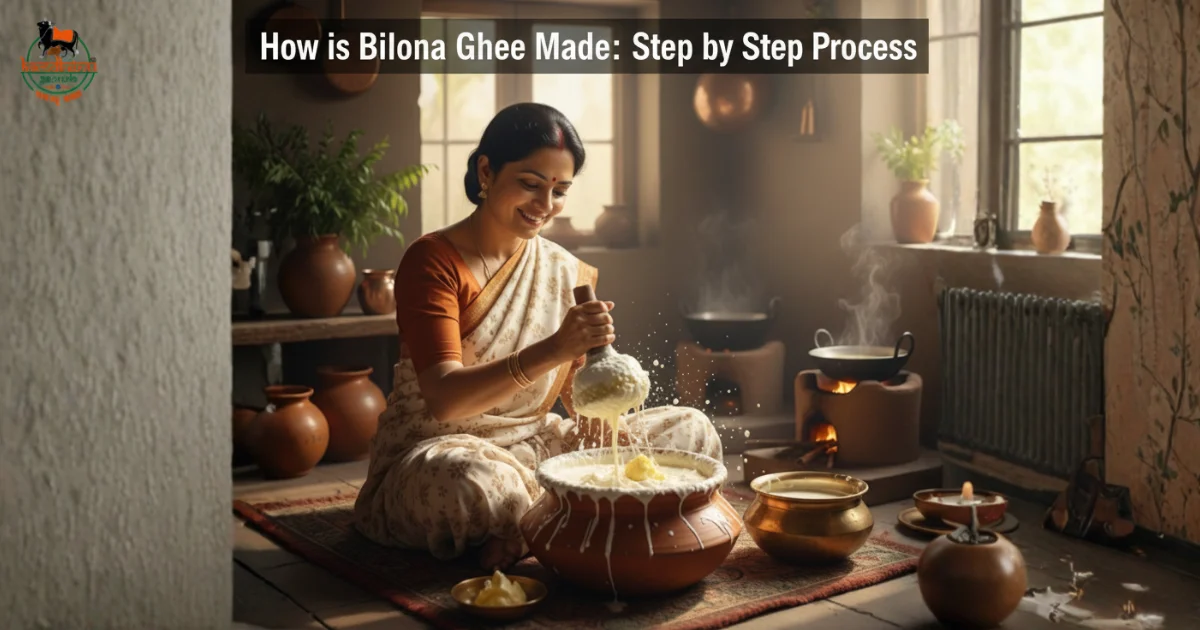
Once the curd is ready, it is churned manually with a wooden bilona. The churning is done in both clockwise and anticlockwise directions, helping the butter separate naturally. This slow churning:
- protects the natural enzymes
- prevents overheating
- keeps the texture and nutrients intact
The result is soft, aromatic makkhan (butter) and nutritious buttermilk.
3. Slow Cooking of Makkhan
The extracted makkhan is then heated slowly on a low flame in a traditional vessel (often an iron pot or earthen handi). As the water evaporates, the butter transforms into ghee with:
- a golden colour
- a nutty aroma
- a grainy texture
This gentle simmering is the heart of the Bilona process — no high heat, no pressure, no chemicals.
4. Natural Clarification & Filtration
When the milk solids settle and pure ghee rises to the top, the ghee is filtered carefully and stored in clean, airtight containers. This final product is pure, aromatic, and nutritionally superior.
Why Bilona Ghee Is Special?
Bilona ghee is not just another kitchen ingredient — it is food prepared with harmony, where every step preserves purity, health, and flavor. Here’s why it stands out:
1. Richer Nutrition
Because the process uses fermented curd, Bilona ghee contains:
- natural probiotics (from curd stage)
- fat-soluble vitamins A, D, E & K
- omega fatty acids
- antioxidants
Slow heating helps retain more nutrients compared to industrial high-heat methods.
2. Better Digestibility
Ayurveda considers Bilona ghee “light” and easy to digest. Since it’s made from cultured butter, many people find it gentler on the stomach.
3. Authentic Aroma & Grainy Texture
The signature nutty aroma and granular texture come from slow cooking — something machine-made ghee cannot replicate.
4. Chemical-Free & Preservative-Free
True Bilona ghee never contains:
- artificial flavours
- additives
- stabilizers
- refined oils
It’s pure, clean, and natural — just the way traditional ghee should be.
5. Ayurvedic Significance
Bilona ghee is used in:
- Panchakarma therapies
- medicinal formulations
- digestive remedies
- spiritual rituals
It is believed to enhance memory, support immunity, and balance doshas.
6. Higher CLA Content
Bilona ghee contains more CLA (Conjugated Linoleic Acid), which may support fat metabolism and immunity.
7. Better for Lactose & Casein Sensitivity
Since the curd stage ferments the milk, Bilona ghee has almost no lactose or casein, making it gentler for sensitive individuals.
8. Ideal for Ayurvedic Lifestyle
In Ayurveda, Bilona ghee is considered “sattvic” and used in Panchakarma, nasya, abhyanga, and various herbal formulations.
How Bilona Ghee Different From Industrial Ghee
| Feature | Bilona Method Ghee | Industrial Cream-Based Ghee |
| Raw Material | Cultured curd (dahi) | Cream |
| Churning | Hand-churned (wooden bilona) | Machine-based |
| Heating | Slow-cooked on low flame | High heat / steam |
| Texture | Natural grainy texture | Smooth, uniform |
| Aroma | Nutty, rich | Sometimes flat or burnt |
| Digestibility | Very easy | Moderate |
| Nutrition | Higher retention of vitamins, CLA & enzymes | Loss of heat-sensitive nutrients |
| Lactose Content | Almost zero | May contain trace lactose |
| Ayurvedic Value | Used medically & spiritually | Limited |
The difference is not just in taste — it’s in the entire philosophy behind the process.
Bilona Method at Kamdhenu Gauveda
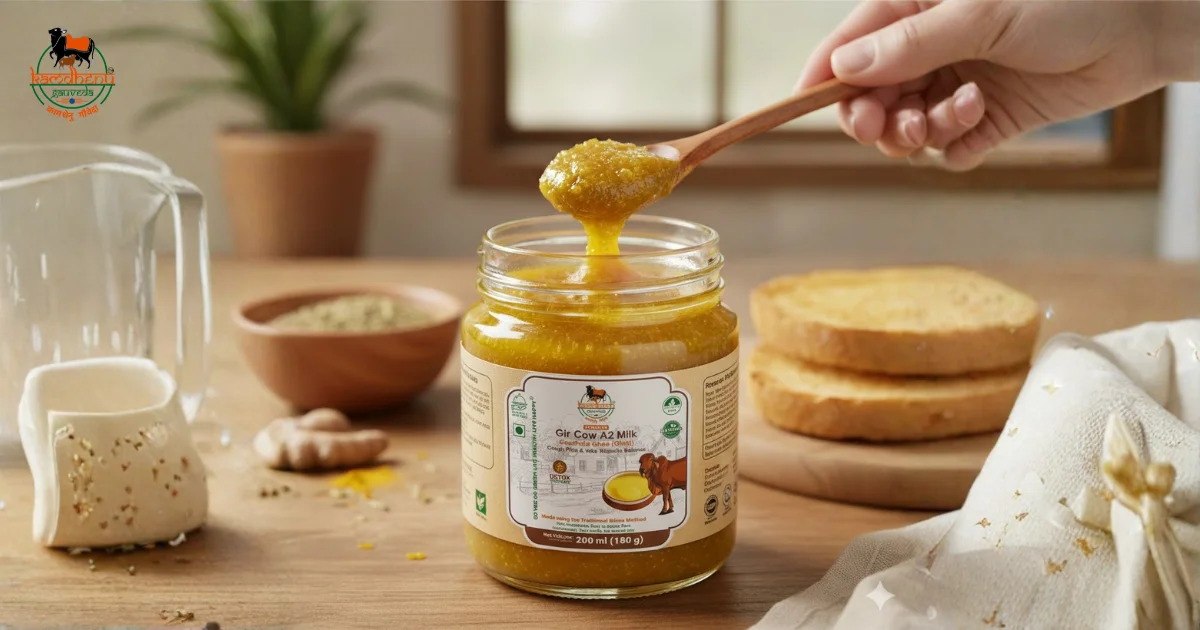
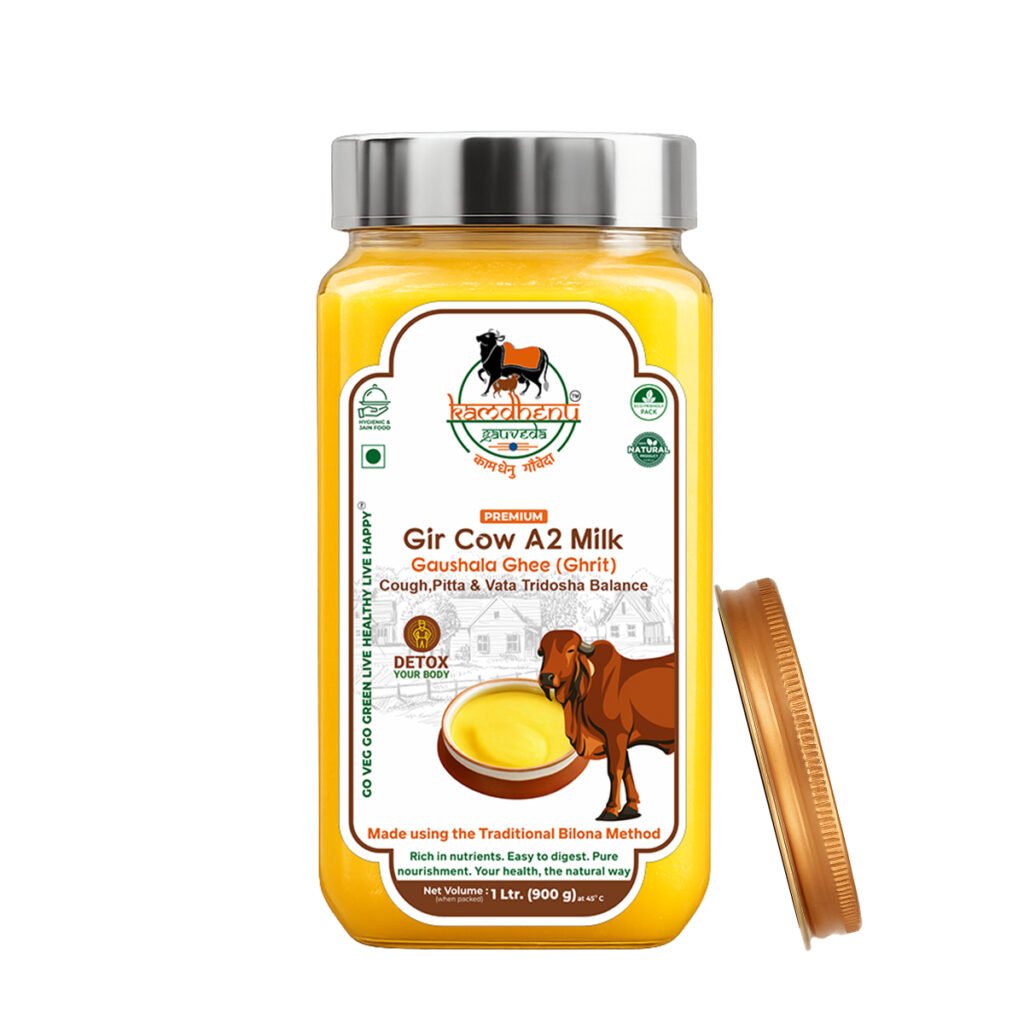
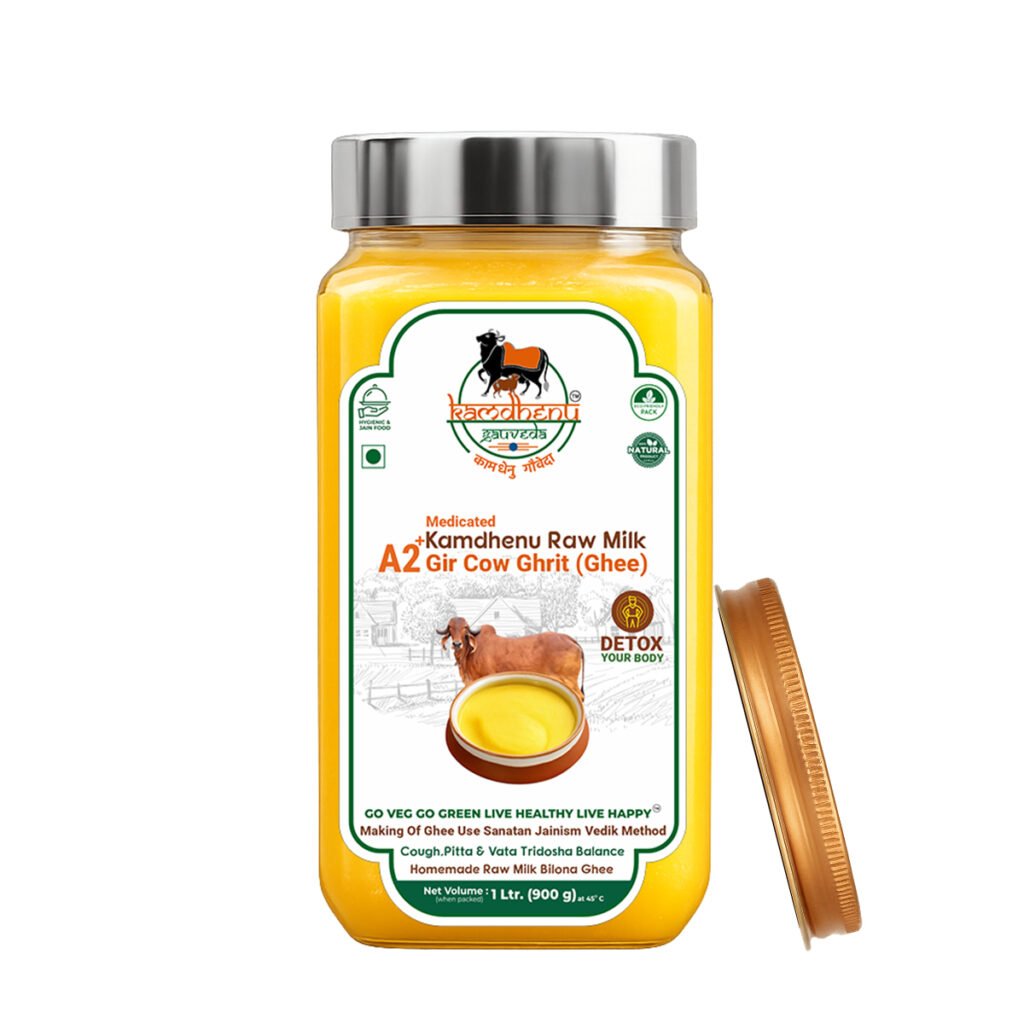
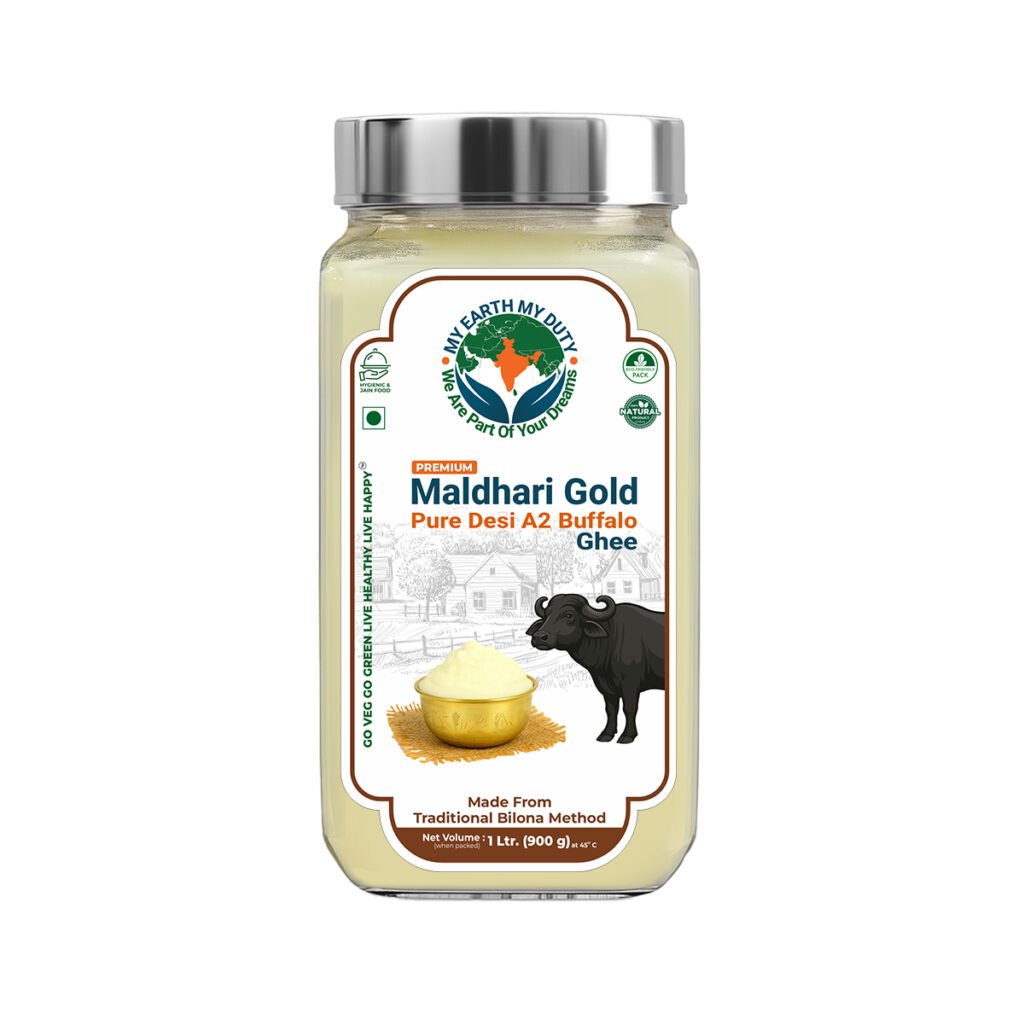
At Kamdhenu Gauveda, the Bilona tradition is preserved with great care. OurA2 Gir Cow GheeandA2 Buffalo Gheeare:
- made from curd, not cream
- hand-churned using the bilona process
- cooked slowly over low flame
- prepared in small batches for quality
- free from preservatives, chemicals, or shortcuts
Each jar represents purity, craftsmanship, and trust.
By using milk from healthy, grass-fed cows in a natural environment, the ghee achieves a superior profile in aroma, colour, and nutrition. This is why Kamdhenu Gauveda remains a favourite among people looking for authentic Vedic-style ghee.
How to Identify Real Bilona Ghee
Since “Bilona” has become a marketing term, many products misuse it. Genuine Bilona ghee shows:
- grainy texture
- deep golden colour
- fresh, nutty aroma
- lab-tested purity
- clarity when melted
- no greasy or overly smooth texture
- Real Bilona ghee solidifies into soft granules when cooled — it should not look completely smooth.
- The price is usually higher because it takes 25–30 litres of milk to make 1 litre of Bilona ghee.
Always check if the brand clearly mentions curd-based, hand-churned, and slow-cooked.
How to Use Bilona Ghee
Bilona ghee can be used daily:
- in cooking
- for tadkas
- on rotis
- in milk
- in Ayurvedic remedies
- for meditation and rituals
A small spoonful daily can bring warmth, energy, and improved digestion.
Conclusion
The Bilona method is more than just a technique — it is a return to authenticity. In a world driven by speed, this ancient Vedic practice reminds us that good things take time. Whether for health, taste, or tradition, Bilona ghee stands as one of the purest foods you can bring into your home.
With brands like Kamdhenu Gauveda preserving this heritage, consumers today can experience the same ghee our ancestors cherished. Pure, slow-made, nutrient-rich — that’s the true essence of Bilona ghee.
FAQs
The Bilona method is a traditional Vedic process of making ghee from cultured curd, not cream. Curd is hand-churned using a wooden bilona to extract butter, which is then slow-cooked on a low flame to produce pure ghee. This method retains more nutrition and gives ghee its rich aroma and grainy texture.
Bilona ghee is made from cultured curd, hand-churned, and slow-cooked. Normal ghee is usually made from cream using machines and high heat. Bilona ghee is richer in nutrition, aroma, and digestibility.
Not necessarily.
A2 ghee refers to ghee made from A2 milk (usually Gir or other desi cow breeds).
Bilona ghee refers to the traditional method of preparation. A ghee can be A2 but not Bilona if it’s made from cream. True Bilona ghee is both curd-based and hand-churned.
Check texture, aroma, and label.
Pure ghee is grainy, aromatic, golden, and melts clear.
Avoid brands that do not mention curd-based or hand-churned.
A lab-tested purity report is the best proof.
Boil milk → set curd → hand-churn curd into butter → slow cook butter on low flame → filter and store. This is the authentic Vedic Bilona method.
It supports digestion, boosts immunity, improves energy, enhances skin health, balances doshas, and provides vitamins A, D, E, and K. It is easier to digest than regular ghee.
Bilona ghee is made from curd, not cream. This process requires 25–30 litres of milk for just 1 litre of ghee, along with hand-churning and slow cooking. The labour, milk quantity, and time make it costlier but more authentic.
Yes. Bilona ghee contains CLA, which helps improve metabolism and supports natural fat burning.
Absolutely. A small spoonful daily supports digestion, immunity, skin health, energy, and overall wellness.
Top Rated Products

Latest Post