








Blog
Sahiwal Cow Milk Per Day: Yield, Price, Fat %, Profit & Complete Buyer Guide (2026)
India has a long tradition of dairy farming, and indigenous cow breeds continue to play a vital role in producing nutritious milk. Among them, the Sahiwal cow is widely regarded as one of the finest dairy breeds due to its high milk production, strong disease resistance, and adaptability to hot climates.
Whether you are a dairy farmer, organic milk entrepreneur, or someone researching A2 milk sources, understanding the Sahiwal breed can help you make an informed decision.
Quick Answer:
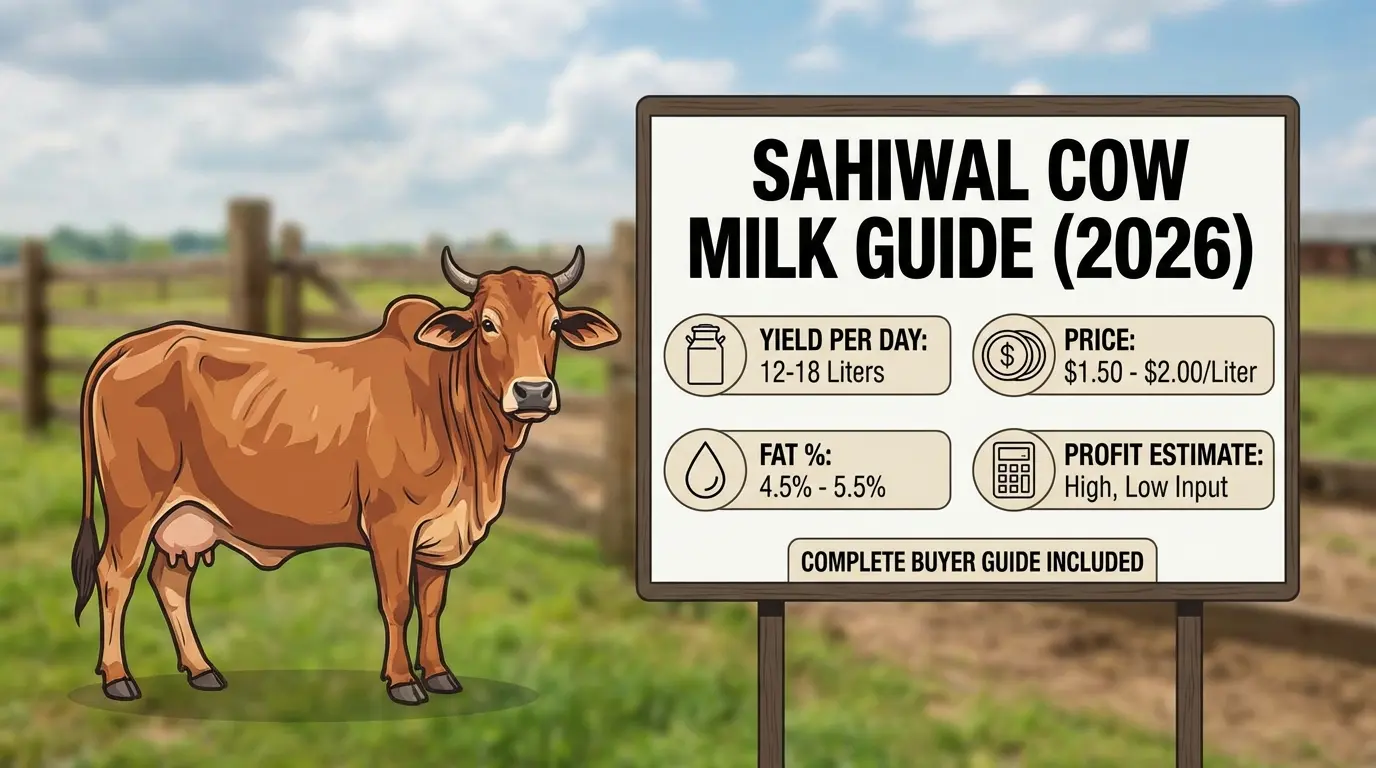
A Sahiwal cow typically produces 8–12 litres of milk per day, while high-performing cows under proper nutrition and farm management can reach 15–20 litres daily.
In this guide, we will cover everything buyers and researchers want to know — from milk yield and fat percentage to price, profitability, and how to identify a pure Sahiwal cow.
What Is a Sahiwal Cow?
The Sahiwal is a premier indigenous dairy breed that originated in the Punjab region of the Indian subcontinent. Over time, it has gained recognition not only across India but also in several tropical countries due to its excellent dairy qualities.
Unlike many exotic breeds that struggle in extreme heat, Sahiwal cattle are naturally adapted to tropical environments. Their ability to maintain milk production even during harsh summers makes them a dependable choice for sustainable dairy farming.
Today, pure Sahiwal herds are commonly found in Punjab, Haryana, Rajasthan, and parts of Uttar Pradesh, where organized breeding programs help preserve their genetic quality.
Sahiwal Cow Milk Per Day (Milk Yield)
One of the biggest reasons behind the popularity of this breed is its impressive productivity.
✔ Average Milk Yield: 8 to 12 litres per day under normal farm conditions.
✔ High-Yield Potential: Well-managed cows can produce 15–20 litres daily, especially when provided with balanced feed and proper veterinary care.
✔ Lactation Yield: Typically ranges between 2,000 and 3,000 litres per cycle, with elite animals exceeding this range.
This level of productivity makes the breed highly suitable for commercial dairy operations, particularly those focusing on premium milk segments.
Milk Fat Percentage — Why It Matters
Milk quality is just as important as quantity, and this is where Sahiwal cows truly stand out.
- Average Fat Content: 4.5% – 5.5%
- Rich in essential nutrients such as calcium and protein
- Naturally suitable for traditional dairy products
Because of its higher fat content, the milk is especially valued for producing butter, curd, and traditional bilona-style ghee known for its aroma and granular texture.
For dairy brands targeting health-conscious consumers, high-fat milk often translates into better product yield and enhanced taste.
Sahiwal Cow Price in India (2026)
The cost of a Sahiwal cow varies depending on factors like age, pedigree, health, and milk capacity.
Typical Price Range:
| Category | Estimated Price |
| Heifer | ₹40,000 – ₹60,000 |
| Milking Cow | ₹70,000 – ₹1,20,000 |
| High-Yield / Superior Pedigree | ₹1.2 lakh – ₹1.5 lakh+ |
While the upfront investment may appear higher than some local breeds, the long-term milk output often provides a stronger return.
How to Identify a Pure Sahiwal Cow
Buyers frequently worry about crossbreeds, so recognizing physical traits is important before making a purchase.
Look for these characteristics:
- Reddish-brown or pale red coat (sometimes with white patches)
- Loose skin that helps regulate body temperature
- Broad body with a well-developed udder
- Short, thick horns
- Heavy dewlap (loose skin under the neck)
- Calm and docile temperament
These features are strong indicators of breed purity, though consulting an experienced breeder is always recommended.
Why the Sahiwal Cow Is Highly Valued
1. Strong Adaptability to Indian Climate
Sahiwal cattle tolerate heat better than many high-yield exotic breeds. Their natural thermoregulation allows them to remain productive even when temperatures rise.
2. Natural Disease Resistance
This breed shows resilience against several tropical diseases and parasites, reducing medical expenses and improving long-term herd health.
3. Consistent Milk Production
Rather than sharp fluctuations, Sahiwal cows are known for stable output — something dairy farmers highly prefer for predictable income.
4. Gentle Nature
Their calm behavior makes them easier to manage, even for small-scale farms. Lower stress in cattle is often associated with better milk let-down and overall productivity.
Is Sahiwal Cow Good for A2 Milk?
Indigenous breeds like Sahiwal are commonly associated with A2-type beta-casein protein, which many consumers consider easier to digest compared to mixed protein milk.
As awareness around traditional nutrition grows, demand for milk from native breeds continues to rise — especially among urban households seeking minimally processed dairy options.
For businesses focused on premium dairy categories, this trend presents a strong long-term opportunity.
Is a Sahiwal Cow Profitable for Dairy Farming?
Profitability depends on multiple factors, but the Sahiwal breed offers several economic advantages.
✔ Higher Milk Output
More milk per animal increases revenue potential.
✔ Long Productive Life
Indigenous cows often remain productive for many years, lowering replacement costs.
✔ Reduced Veterinary Expenses
Stronger immunity can mean fewer treatments.
✔ Better Fat = Better Dairy Returns
Higher fat improves the yield of value-added products like ghee and paneer. When managed properly, the breed can support both small dairy units and expanding commercial farms.
Who Should Consider Buying a Sahiwal Cow?
This breed is particularly suitable for:
- Dairy farmers seeking stable production
- Organic and natural milk businesses
- Entrepreneurs entering the A2 dairy segment
- Farms located in hot or semi-arid regions
- Producers focused on high-fat milk products
If your goal is long-term productivity rather than short bursts of extreme yield, the Sahiwal is often viewed as a dependable investment.
Advantages vs Disadvantages
Advantages:
- High milk yield among indigenous breeds
- Excellent heat tolerance
- Strong disease resistance
- Good fertility and calving ease
- Higher butterfat content
Possible Challenges:
- Requires quality nutrition for peak production
- Initial purchase cost may be higher
- Productivity depends heavily on farm management
Balanced care is the key to unlocking the breed’s full potential.
Sahiwal vs Other Indigenous Breeds
| Breed | Milk Yield (Per Day) | Key Strength |
| Sahiwal | 8–12 Litres | High yield + fat |
| Gir | 6–10 Litres | Widely recognized dairy breed |
| Red Sindhi | 7–10 Litres | Strong adaptability |
| Tharparkar | 5–8 Litres | Performs well in dry regions |
| Punganur | 3–5 Litres | Small size, high-fat milk |
For buyers comparing productivity and climate resilience, Sahiwal often ranks among the top choices.
Quick Buyer Tips Before Purchasing
✔ Always buy from a trusted breeder
✔ Check vaccination records
✔ Observe milking performance if possible
✔ Evaluate feed availability in your region
✔ Avoid unknown crossbreeds
Final Verdict: Is the Sahiwal Cow Worth It?
The Sahiwal cow has earned its reputation as one of the most dependable indigenous dairy breeds for good reason. Its combination of strong milk yield, high fat content, climate adaptability, and resilience makes it a valuable asset in modern dairy farming.
For farmers and dairy businesses aiming to balance productivity with sustainability, the breed represents a practical and future-ready choice.
As consumer interest in traditional and naturally sourced dairy continues to grow, indigenous cows like Sahiwal are likely to remain at the center of India’s evolving dairy landscape.
Also Read: Punganur Cow Milk Per Day
Frequently Asked Questions
Most cows produce 8–12 litres daily, while top performers may reach 15–20 litres with proper care.
Usually between 4.5% and 5.5%, making it ideal for traditional dairy products.
Typically after first calving, around 36–40 months.
With proper care, they can live 15–20 years and remain productive for a significant portion of that time.
In tropical climates, indigenous breeds often perform more reliably due to heat tolerance and disease resistance.
Top Rated Products

Latest Post